
CER & PKP’s EU Rail Push: Investment, Sustainability & Growth
European Railway Industry urges EU for swift rail investment to boost competitiveness and sustainability.
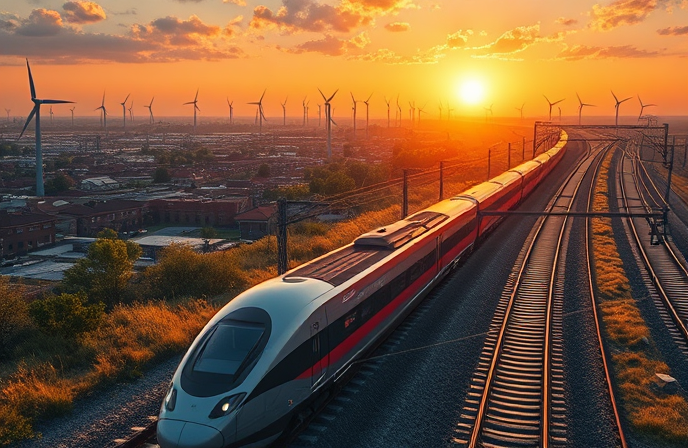
CER Calls for Urgent Action to Boost Rail’s Role in European Competitiveness and Sustainability
In a decisive move to bolster the railway sector’s potential, the Community of European Railway and Infrastructure Companies (CER), the leading European railway industry organization, has issued a stark warning to EU institutions. CER leaders are urging immediate action to strengthen rail’s position within the European Union, emphasizing its crucial role in achieving strategic goals related to competitiveness, sustainability, and resilience. This call to action, delivered through a joint declaration, comes after the European Railway Summit held in Wrocław, Poland, on April 30th, 2024. The declaration highlights the urgent need for legislative and financial measures to unlock rail’s full potential. The article will delve into the key proposals put forth by CER, exploring the critical issues hindering railway development and outlining the strategic implications for the future of European transport.
The Call for Action: A Unified Industry Voice
The declaration, entitled “Enhancing EU Competitiveness through Transport Decarbonisation and Sustainable Rail Mobility,” represents a unified front from the European railway sector. It calls upon the European Commission, the European Parliament, and heads of member states to expedite the adoption and implementation of policies designed to create a favorable environment for railway growth. Spearheading this initiative are Alberto Mazzola, Executive Director of CER, and Dr. Alan Beroud, CER Vice-Chair and CEO of PKP S.A. (Polskie Koleje Państwowe, Polish State Railways), who have submitted the joint appeal to key EU figures, including Commission President Ursula von der Leyen and other relevant Commissioners. The primary focus of the declaration is to advocate for the strategic importance of rail as the safest, most energy-efficient, resilient, and sustainable mode of transport, crucial for meeting EU objectives, especially in decarbonisation efforts. The declaration specifically highlights the impact of insufficient investment and the lack of appropriate legal and economic frameworks as significant impediments to the sector’s progress.
Investment Imperative: Fueling Economic Growth through Rail Infrastructure
A major concern raised by CER leaders, as highlighted by Dr. Alan Beroud, is the inadequate pace of railway investment. This has far-reaching economic consequences. The industry representatives emphasize the urgent need for increased funding and favorable economic conditions. The declaration cites an International Monetary Fund analysis indicating that every 1% increase in GDP invested in rail infrastructure can generate a 1.5% GDP increase over four years. This demonstrates the significant economic benefits tied to rail infrastructure investment, making it a critical priority for policymakers. Addressing the current investment shortfall is crucial for unlocking the sector’s potential to contribute to economic growth and ensure the long-term sustainability of the European transport system.
Overcoming Obstacles: Legislative and Economic Frameworks
The joint declaration identifies significant obstacles hindering the development of rail. These include, but are not limited to, the lack of streamlined regulatory processes, insufficient investment, and the absence of a level playing field with other transport modes. The declaration is also highlighting the need to address these challenges through a concerted effort from EU and national institutions. The legal and economic frameworks must be adapted to support the ongoing operation and growth of railways. CER members stand ready to contribute their expertise and experience to identify and implement solutions aimed at overcoming these barriers and promoting rail as a cornerstone of a sustainable European transport system. The declaration underscores that, without these critical adjustments, it will be difficult to meet the ambitious targets of the European Union, especially those related to its Green Deal and climate change objectives.
CER and PKP: A Strategic Partnership for European Rail
CER’s active role in Brussels as a key advocate for the railway sector is pivotal in driving policy changes and fostering a supportive regulatory environment. Representing over 60 members, including railway undertakings, infrastructure managers, and associations, CER actively engages with EU institutions to advance the interests of its members. PKP S.A., a full member of CER since 2002, plays a crucial role in this dynamic, actively participating in CER’s work at both technical and political levels. Dr. Alan Beroud’s recent election as CER Vice-Chair further strengthens PKP Group’s influence within the organization, highlighting its commitment to shaping the future of European rail transport. The collaboration and the shared interests of CER and PKP S.A. further underscore the importance of working together to address the challenges and the opportunities facing the sector.
Conclusion
The joint declaration from CER signifies a crucial moment for the European railway sector. It underscores the pressing need for immediate action from EU institutions to support the growth and development of rail transport. The industry’s unified stance, emphasizing the imperative for legislative and financial support, reflects the sector’s commitment to achieving EU strategic goals, particularly in the areas of competitiveness, sustainability, and climate neutrality. Addressing the identified obstacles, especially related to investment and regulatory frameworks, is paramount for unlocking rail’s full potential. The declaration presents the industry’s concrete proposals, and its willingness to cooperate demonstrates its dedication to promoting rail as the backbone of a sustainable and resilient European transport system. As the EU navigates its transport policy and infrastructure investment, the railway sector’s call to action provides a clear roadmap for policymakers. The future outlook for European rail depends heavily on the swift implementation of the measures outlined in the declaration, making this a pivotal juncture for the industry.
RELATED POSTS

July 23, 2012 11:15 am
The Nigerian government has awarded China Civil Engineering Construction Corporation...

July 10, 2023 12:50 am
This article analyzes the recent agreement between Stadler and Azienda...
October 8, 2019 7:30 pm
This article examines the Massachusetts Bay Transportation Authority’s (MBTA) significant...

February 13, 2025 4:06 pm
The Honolulu Skyline Rail Transit Project: Overcoming Challenges and Achieving...

December 19, 2015 8:14 am
Jakarta will soon see the operation of the long-awaited railway...
April 24, 2020 2:13 am
The Impact of the COVID-19 Pandemic on Indian Railways: A...