
Dakar TER: 2026 Construction Update & Route Map
Senegal’s Dakar Regional Express Train (TER) project is complete, boasting modern infrastructure and increased daily ridership to 115,000 passengers. This railway upgrade connects Dakar to the airport, boosting economic growth.

Project Profile: Dakar Regional Express Train (TER)
The Dakar Regional Express Train (TER) is a landmark infrastructure project in Senegal, engineered to modernize the capital’s public transport network. It establishes a high-speed, high-capacity electrified rail corridor connecting Dakar’s city centre with the burgeoning economic hub of Diamniadio and the Blaise Diagne International Airport (AIBD). This profile outlines the technical specifications and strategic impact of this critical transportation artery.
| Attribute | Details |
|---|---|
| Project Name | Dakar Regional Express Train (TER) |
| Location | Dakar, Senegal |
| Route Length | 55 km (Phase 1: 36 km; Phase 2: 19 km) |
| Max Speed | 160 km/h |
| Estimated Cost | Approx. €1 billion |
| Status (2026) | Phase 1 (Dakar-Diamniadio) Operational; Phase 2 (Diamniadio-AIBD) Operational |
| Key Contractors | Alstom, Eiffage, Yapi Merkezi, Thales, Equans, SYSTRA |
Technical Specifications
The Dakar TER operates on a 55km standard-gauge, double-track electrified line. Phase 1 involved the comprehensive upgrade of the 36km corridor between Dakar and Diamniadio, while Phase 2 entailed the greenfield construction of a 19km segment to Blaise Diagne International Airport (AIBD). The system is electrified at 25kV AC and features a state-of-the-art signaling system based on the European Train Control System (ETCS) Level 2, ensuring high safety standards and operational efficiency. Communication is managed via a GSM-R network, providing a dedicated and secure link between the rolling stock and the central control centre.
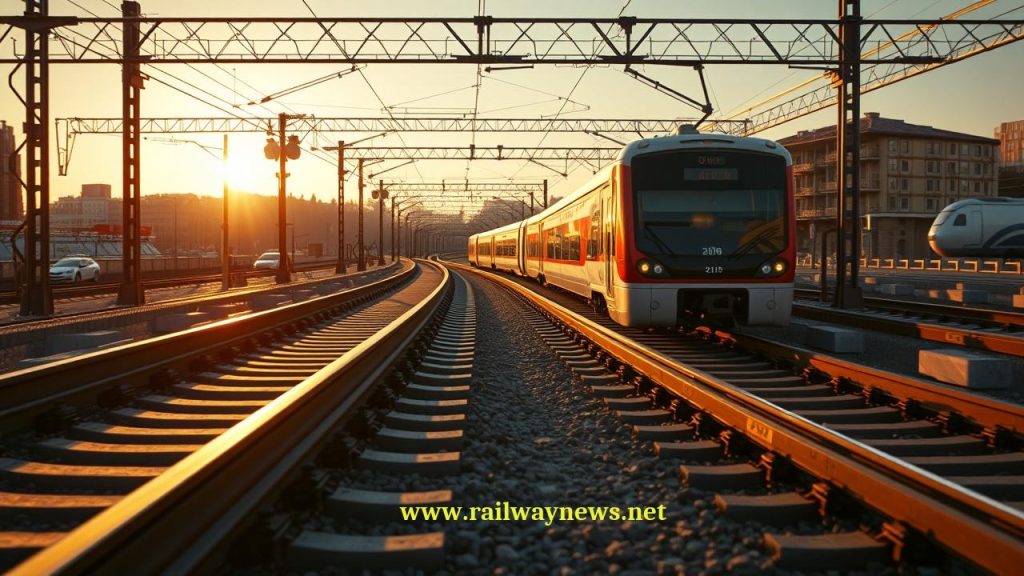
The rolling stock consists of 15 Alstom Coradia Polyvalent bi-mode (electric and diesel) trains. Each four-car trainset has a capacity of 565 passengers and is designed with low floors for enhanced accessibility. The dual-mode capability provides critical operational resilience, allowing service continuity during potential power disruptions. The infrastructure design is forward-thinking, incorporating a dedicated maintenance track along the main corridor that can be converted into a third operational track to accommodate future capacity demands.
Key Takeaways
- Economic Catalyst: The TER directly connects Dakar’s central business district with the new international airport and the Diamniadio urban development pole, significantly reducing travel times, alleviating road congestion, and stimulating commercial and real estate development along its corridor.
- Technological Benchmark for Africa: By implementing ETCS Level 2 and GSM-R, Senegal has established a new benchmark for modern railway systems in West Africa. This technological leap enhances safety, allows for higher speeds, and increases line capacity compared to conventional signaling systems.
- Model for International Collaboration: The project’s successful financing and execution demonstrate a robust model for large-scale infrastructure development, involving a consortium of international lenders (AfDB, IsDB, French agencies) and specialized engineering firms from France, Turkey, and Senegal.
Frequently Asked Questions (FAQ)
What is the status of the Dakar TER project?
The Dakar Regional Express Train (TER) is fully operational. Phase 1 of the project, covering the 36km stretch from Dakar to Diamniadio, launched in December 2021. Phase 2, which extends the line by 19km from Diamniadio to the Blaise Diagne International Airport (AIBD), subsequently completed and is also in full service, providing a direct rail link to the airport.
Who are the main companies building the Dakar Express Train?
The Dakar Express Train was built by a consortium of international and local companies. The primary design-build contract for the infrastructure was awarded to Eiffage (France), Yapi Merkezi (Turkey), and Compagnie Sahélienne d’Entreprise (Senegal). Alstom (France) supplied the trainsets, while Thales and Equans (France) were responsible for the advanced signaling and telecommunication systems.
RELATED POSTS
March 9, 2026 5:45 pm
ÖBB and Wiener Linien launch Vienna S-Bahn 13 km main...
March 4, 2026 12:02 am
Balfour Beatty VINCI completes 2.4km HS2 Coleshill Viaduct decks in...